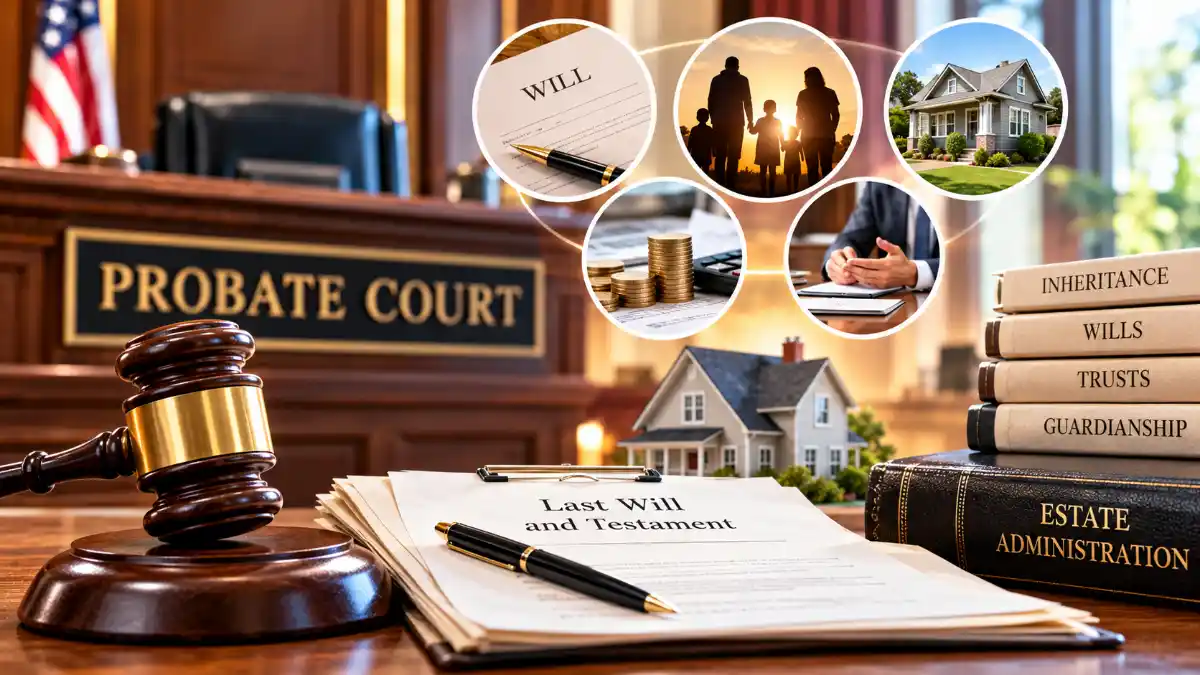
Probate Court: What It Is, How It Works, and When You Need It
Probate court is a court or judicial division that handles legal matters involving a deceased person’s estate. Its responsibilities can include validating wills, appointing estate representatives, resolving inheritance disputes, and overseeing the administration of property and debts. Depending on state law, probate courts may also handle guardianships, conservatorships, and certain trust-related matters. The distinction is simple: probate court is the judicial body, while probate refers to the legal process of validating a will and, more broadly, administering an estate.
After someone dies, probate court may become involved to determine who has the authority to manage the estate, make sure valid debts are addressed, and oversee the distribution of remaining assets. Whether court proceedings are necessary depends on state law, the property involved, and how that property was owned. Even when someone leaves a valid will, probate may still be required.
What Does Probate Court Do?
Probate court provides legal oversight when a deceased person’s property needs to be administered or when disputes arise over an estate.
Its responsibilities may include:
- Validating wills: Reviewing a submitted will to determine whether it meets the legal requirements for validity.
- Appointing representatives: Giving an executor or administrator the authority to manage an estate.
- Overseeing estate administration: Addressing legal matters involving estate property, outstanding debts, and distributions to heirs or beneficiaries.
- Resolving inheritance disputes: Hearing challenges involving wills, inheritance rights, or the conduct of estate representatives.
- Handling other protective proceedings: Managing certain guardianship, conservatorship, and trust matters when permitted by state law.
Not every estate needs extensive court supervision. Some qualify for simpler procedures, while others require formal hearings, particularly when family members disagree or legal questions remain unresolved.
The court’s name also depends on the state. New York uses Surrogate’s Court, while Maryland has Orphans’ Courts and local Registers of Wills involved in estate administration.
How Does the Probate Court Process Work?
The probate court process typically involves filing a petition, appointing someone to manage the estate, identifying property and debts, and distributing the remaining assets. The exact steps, filing rules, and deadlines depend on the state.
1. File a Probate Petition and Required Documents
The process generally begins when an eligible person asks the appropriate court to open an estate proceeding.
This might be the person named as executor in a will, a surviving spouse, another eligible relative, or someone else permitted to file under state law.
Depending on the jurisdiction, the required paperwork may include:
- A certified death certificate.
- The original will, if one exists.
- A completed probate petition.
- Names and information about heirs and beneficiaries.
- Preliminary details about the deceased person’s assets.
For example, New York’s probate filing instructions identify the original will, certified death certificate, petition, and supporting documents as key filing requirements.
The case is generally filed in the county where the deceased person was legally domiciled. If they owned property in another state, additional proceedings may be necessary there.
2. Appoint an Executor or Administrator
In formal estate administration, the court usually appoints someone with the legal authority to handle the deceased person’s affairs.
An executor is generally nominated in a will and appointed by the court. An administrator is commonly appointed when there is no valid will or when the nominated executor cannot serve.
Both are called personal representatives. They receive documents, often known as letters testamentary or letters of administration, confirming their authority to act for the estate.
Being named executor in a will does not necessarily give someone immediate authority over probate assets. Formal appointment is generally required, although some simplified estate procedures work differently.
3. Identify Assets and Notify Interested Parties
Once appointed, the personal representative identifies the deceased person’s property and prepares any inventory or valuations required by law.
They must also notify the appropriate people, which may include heirs, beneficiaries, and creditors. Some states require notices to be published so potential creditors have an opportunity to submit claims.
Another important responsibility is separating probate assets from property that can legally pass to someone outside the probate process.
4. Pay Debts and Distribute Remaining Property
Before beneficiaries receive their inheritances, the personal representative must address valid creditor claims, administration expenses, and applicable taxes.
Whatever remains is distributed according to the valid will or, when there is no valid will, the state’s inheritance laws.
Depending on the case, the representative may need to submit an accounting, request approval for distributions, or complete other filings before closing the estate.
The California Courts’ formal probate overview explains how opening an estate, managing its obligations, and obtaining approval for final distribution can work in a formal proceeding.
What Happens in Probate Court Without a Will?
An estate can still go through court-supervised administration when someone dies without a valid will. This is known as intestacy.
Some states use different terminology for these cases. In New York, for example, the proceeding is called administration when someone dies without a will, rather than probate.
Without a valid will to guide distribution, state intestate-succession laws determine who is entitled to inherit.
A court or authorized probate office generally appoints an administrator, who identifies estate assets, addresses debts, and distributes the remaining property to eligible heirs.
A surviving spouse, children, parents, or other relatives may have inheritance rights. Who inherits, and how much, depends on the state’s laws and the deceased person’s family circumstances.
Dying without a will does not mean the government automatically takes the estate. Property generally passes to the state only when no legally entitled heirs exist under the applicable inheritance rules.
When Is Probate Court Required, and When Can It Be Avoided?
Probate may be necessary when someone dies owning property solely in their name, and that property cannot be transferred through another legally recognized procedure.
Still, not everything a person owns must pass through probate court.
Certain assets may transfer outside formal probate, including:
- Jointly owned property with survivorship rights: The deceased person’s interest may pass directly to the surviving owner.
- Accounts with named beneficiaries: Eligible bank accounts, retirement accounts, and life insurance proceeds may transfer to the designated beneficiaries.
- Assets held in a living trust: Property properly transferred into a living trust can generally be administered under the trust’s terms.
- Property eligible for small-estate procedures: Some states offer simplified methods for transferring qualifying property without a full probate case.
Whether these options apply depends on ownership documents, beneficiary designations, estate value, and state law.
The California Courts’ guide to property after someone dies explains how the amount and type of property can affect whether formal court proceedings are needed.
One important point is that having a will does not automatically avoid probate. A will directs how covered property should be distributed, but court proceedings may still be necessary to carry out those instructions.
How Much Does Probate Court Cost, and How Long Does It Take?
Probate costs and timelines vary considerably. There is no nationwide filing fee or standard amount of time that applies to every estate.
Expenses may include court filing fees, required notices, property appraisals, administrative costs, and attorney fees if legal representation is needed.
How long probate takes depends on several factors, including the complexity of the estate, creditor-notice periods, property sales, disagreements among beneficiaries, and local court procedures.
An uncomplicated estate may need relatively little court involvement. A case involving disputed property or a contested will can take longer and require additional hearings.
Not everyone involved must necessarily appear in court. Some matters can be handled through paperwork or simplified procedures, depending on local rules.
Hiring an attorney can be particularly helpful when family members disagree, assets are difficult to locate, or the deceased person owned property in multiple states. Whether an attorney is legally required depends on the jurisdiction and the circumstances of the case.
How to Find Your Local Probate Court and Start a Case
If you need to begin estate administration, first determine the state and county where the deceased person was legally domiciled.
From there, follow these steps:
- Find the correct court or filing office. Depending on the state, it might be called Probate Court, Surrogate’s Court, Register of Wills, or something similar.
- Review the local probate requirements. Check whether the estate needs formal administration or qualifies for a simpler transfer procedure.
- Get the required forms. Confirm which petitions, supporting documents, and filing methods your local court accepts.
- Check filing fees and deadlines. Use the current instructions issued by the appropriate court rather than relying on general estimates.
- Look for available estate records. Some courts provide online searches, while others require you to contact the clerk’s office.
In Maryland, for example, the Register of Wills provides information about opening estates, filing documents, and accessing estate records.
If you are uncertain about which procedure applies, your local court’s self-help services or a qualified probate attorney may be able to explain the available options.
Read Also: Probate Court
Frequently Asked Questions About Probate Court
Not always. Some probate cases involve hearings, but that does not mean everyone connected to the estate must attend. Depending on local rules, certain matters can be handled through written filings, an attorney, or remote appearances. Check any court notices you receive to determine whether your attendance is required.
Sometimes. Certain jurisdictions allow executors to handle probate matters without hiring an attorney, while others have restrictions, particularly when an executor acts on behalf of an estate with multiple beneficiaries. If there are disputed debts, complicated assets, or disagreements over inheritance, getting legal advice may help prevent mistakes.
A person with legal standing may challenge a will for reasons such as improper execution, lack of testamentary capacity, or undue influence. The court reviews the evidence and applies the relevant law. Depending on the dispute, resolving the challenge may delay distribution and increase the estate’s expenses.
Many probate records are available to the public, although access varies by state and court. Beneficiaries may be able to review filed wills, petitions, inventories, and court orders. Some records are accessible online, while others require a request to the court clerk. Confidentiality restrictions may apply to certain documents.
In some situations, yes. However, an executor must first consider the estate’s debts, taxes, expenses, and any funds that must be reserved for outstanding obligations. Distributing property too early can create legal and financial problems, including potential personal liability if the estate later cannot meet its obligations.