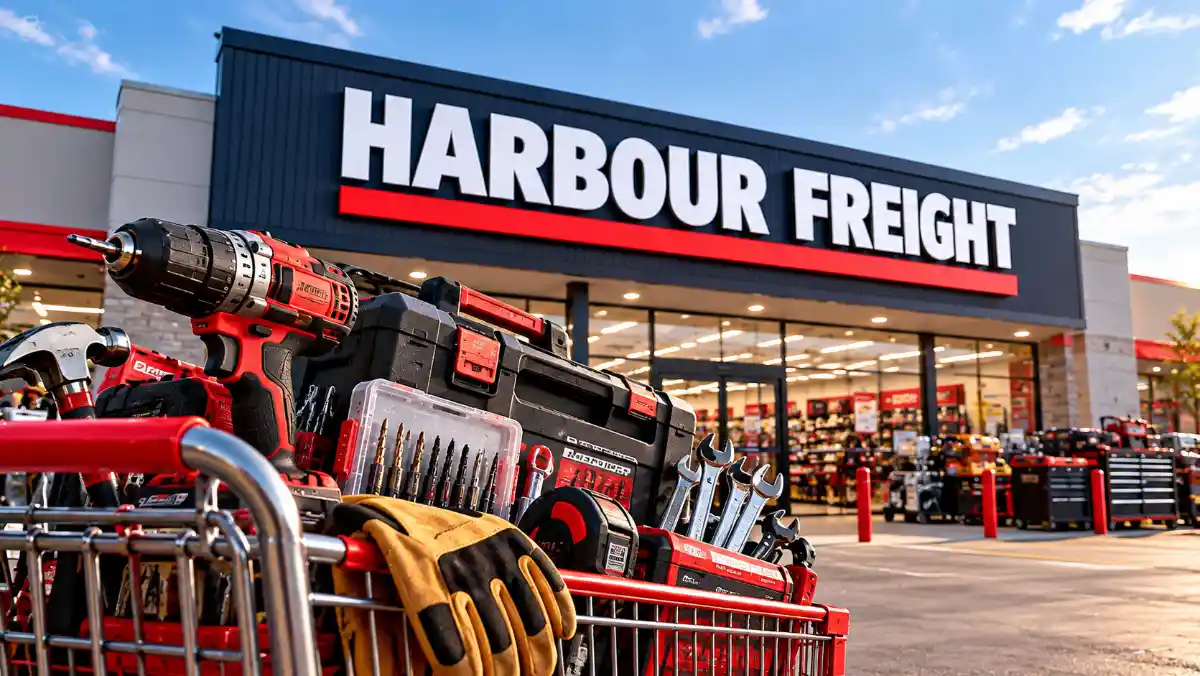
Harbour Freight: What to Buy, What to Skip & How to Choose
Now, Harbour Freight, if you were searching for Harbour Freight, the last thing that would be on your mind is a store. You are looking for what tools to buy, what kind of brand best suits your needs, how much you should pay, or whether a cheaper tool will work for the job that you plan on doing.
The more pertinent question is not whether every Harbor Freight item is “good” or “bad.” The more useful question is: Is this tool, make, model,l price, warranty, and workload appropriate for you?
Harbor Freight has a wide selection of Tools and Equipment categories, including Automotive, Hand & Power Tools, Storage, Generators, Welding Supplies, Outdoor Power Equipment, and Shop Equipment. According to the company, it has over 1,600 locations across the U.S.
This guide will help explain how to navigate a Harbor Freight purchase by not buying it just cause it looks cheap. We’ll cover the major brand differences, what to think about for alternate projects, how to decide if alternatives can be justified as an expense or a cost, and when buying might not be the best option.
What Is Harbor Freight?
Harbor Freight Tools is an American retailer of tools, equipment, storage, and workshop products. Today its brand portfolio includes such names as ICON, Hercules, Predator, U.S. GENERAL, Yukon, Pittsburgh®, Bauer® and Daytona®, along with a long list of accessories under the Quinn name.
This range matters, because “Harbor Freight tool” is no single product class. Evaluate a basic hand tool, for example, a cordless power-tool system or professional-oriented hand-tool line versus heavy-duty rolling storage cabinets.
What does Harbor Freight sell?
The selection covers a wide range of jobs and environments, including:
- Hand tools
- Power tools
- Automotive tools
- Tool storage
- Generators
- Outdoor power equipment
- Welding equipment
- Air tools and compressors
- Shop equipment
- Safety equipment
- Hardware and accessories
The automotive section alone includes lifting equipment, sockets and wrenches, brake and tire tools, diagnostics, cordless tools, air tools, compressors, detailing equipment, and service tools.
For a homeowner, that means you can potentially build a basic repair kit in one place. For someone running a garage or workshop, the selection extends into larger equipment and storage.
Why do people shop at Harbor Freight?
The appeal comes down to choice, accessibility, and different price levels.
Harbor Freight operates more than 1,600 stores across the U.S., and it also sells products online. Its official store directory provides locations by state and a ZIP code search.
The brand also has a large private-label ecosystem, allowing shoppers to choose between different product families rather than treating every tool as if it belongs to the same tier.
That makes the buying process more interesting—but also means you should compare the individual product, not just the retailer’s name.
Harbor Freight product map:
| Category | Examples of what you’ll find |
| Hand tools | Wrenches, pliers, screwdrivers, sockets |
| Power tools | Drills, impact tools, saws, grinders |
| Automotive | Jacks, stands, diagnostics, service tools |
| Storage | Toolboxes, carts, cabinets, workbenches |
| Generators | Portable, dual-fuel and other generator options |
| Workshop | Welders, compressors, lighting, shop equipment |
Are Harbor Freight Tools Good?
There isn’t one answer that applies to every product.
A tool used for five small home projects a year has a different job than a tool used eight hours a day in a professional shop. Your decision should account for workload, frequency of use, performance requirements, ergonomics, warranty coverage, accessories, and replacement availability.
Harbor Freight for occasional DIY projects
For occasional users, the priority is usually versatility.
If you’re hanging shelves, assembling furniture, repairing household items, changing a few parts on a vehicle, or completing weekend projects, you may not need the same equipment chosen by someone who uses a tool every working day.
A sensible beginner setup can start with:
- Screwdrivers
- Pliers
- Adjustable wrench
- Ratchet and socket set
- Tape measure
- Utility knife
- Hammer
- Drill/driver
- Basic toolbox
The key is to buy tools that solve several common problems rather than filling a toolbox with specialty equipment you may never use.
Harbor Freight for serious DIYers
Frequent DIY work changes the equation.
If you regularly work on vehicles, build furniture, remodel rooms, or maintain a larger property, pay more attention to:
- Durability
- Comfort and ergonomics
- Performance
- Battery compatibility
- Accessory availability
- Replacement parts
- Warranty terms
- Storage
This is where choosing a tool ecosystem can become more important than choosing the cheapest individual product.
For example, buying several cordless tools from the same battery platform can be more practical than owning several unrelated systems that each require a different charger and battery.
Harbor Freight for professional use
Professionals should evaluate tools according to the cost of downtime.
If a tool is used every day, a failure can affect a customer’s job, your schedule, or your income. That makes factors such as warranty service, replacement availability, ergonomics, precision, durability, and long-term support more important.
That doesn’t mean one retailer or brand is automatically right or wrong for professional work. It means the decision should be based on the specific tool and workload.
Harbor Freight also offers different warranty structures. Its official warranty page states that its hand tools carry a lifetime warranty against defects in material and workmanship, subject to limitations, while many products have a limited 90-day warranty.
What actually determines whether a tool is worth buying?
Think about value as more than the price printed on the shelf.
Practical tool value = purchase price + performance + included equipment + warranty + workload fit + long-term usability
You don’t need to calculate this with a complicated formula. The idea is simply to avoid comparing products on price alone.
| Factor | Occasional DIY | Frequent DIY | Professional |
| Price | High priority | Important | Important, but not alone |
| Durability | Moderate priority | High | Very high |
| Warranty | Important | Very important | Critical |
| Ergonomics | Useful | Important | Critical |
| Battery ecosystem | Lower priority | Important | Very important |
| Downtime cost | Low | Moderate | High |
Harbor Freight Brands Explained
One of the easiest ways to make a poor purchase is to treat every Harbor Freight brand as interchangeable.
The current official brand directory includes a large number of brands, with ICON, Hercules, Predator, U.S. GENERAL, Bauer, Pittsburgh, Daytona, Yukon, and others among them.
ICON
ICON is one of Harbor Freight’s prominent higher-end tool brands, particularly in hand tools, tool storage, specialty tools, diagnostics, sockets, ratchets, and related equipment.
Its current catalog includes professional-oriented hand tools, tool sets, specialty tools, diagnostic equipment, storage, and shop equipment.
If you’re buying a hand tool that will see frequent use, look beyond the logo. Compare the specific design, materials, ergonomics, warranty, and price with alternatives.
For a professional or serious DIY user, spending more on a frequently used hand tool can make more sense than upgrading every tool in the toolbox.
Hercules
Hercules is particularly relevant to shoppers building a cordless or power-tool setup.
Its current lineup includes cordless tools, batteries and chargers, drills, impact wrenches, grinders, saws, demolition tools, sanders, vacuums, and other equipment.
The biggest question isn’t simply “Is this drill a good deal?”
Ask:
Will I continue buying tools that use this battery platform?
If the answer is yes, the value of the initial battery and charger purchase can extend across future tools.
Predator
Predator is strongly associated with generators and power equipment.
The current lineup includes gasoline, dual-fuel, and tri-fuel generators, along with engines and pressure washers.
When comparing a generator, don’t stop at the price.
Check:
- Running watts
- Starting/peak watts
- Fuel type
- Runtime
- Noise
- Portability
- Outlets
- Maintenance requirements
- Warranty
- Your actual load
A generator that is too small for your intended load isn’t a bargain.
U.S. GENERAL
U.S. GENERAL focuses heavily on tool storage and workshop organization.
The current storage range includes roll cabinets, service carts, mechanics carts, tech carts, and accessories.
This category is particularly useful for people whose tool collection is growing faster than their storage system.
Yukon and other Harbor Freight brands
Yukon is another important name in Harbor Freight’s storage lineup, while the broader catalog contains many additional brands serving specific tool and equipment categories.
The practical lesson is simple: don’t judge a product solely from the brand name.
Start with the job, then compare the product’s specifications, intended workload, warranty, included accessories, and total cost.
Which Harbor Freight Tools Should You Consider?
Instead of building a random list of “best” products, start with your project.
The right first purchase for a homeowner isn’t necessarily the right first purchase for an automotive enthusiast or woodworker.
Essential tools for a new homeowner
A new homeowner usually benefits most from versatile tools that solve common maintenance problems.
A sensible starting group includes:
- Screwdriver set
- Pliers
- Combination or adjustable wrenches
- Ratchet and socket set
- Hammer
- Tape measure
- Utility knife
- Level
- Drill/driver
- Basic toolbox or bag
You don’t need a full workshop on day one.
Start with the tools that match the repairs and projects you actually expect to do.
Tools for automotive DIY
Automotive work often requires a more specialized setup.
Useful categories include:
- Socket sets
- Ratchets
- Torque tools
- Impact tools
- Floor jacks
- Jack stands
- Inspection equipment
- Battery and electrical testers
- Specialty service tools
- Creepers and shop equipment
Harbor Freight’s automotive catalog currently separates products into lifting, sockets and wrenches, brake/tire/wheel tools, diagnostics, cordless tools, air equipment, detailing, and other service categories.
Safety matters here. Never choose lifting equipment based solely on price. Verify the rated capacity, follow the manufacturer’s instructions, and use appropriate support equipment.
Tools for woodworking
A basic woodworking setup can include:
- Measuring tools
- Clamps
- Saws
- Sanders
- Files and rasps
- Workbench
- Dust collection
- Safety equipment
For woodworking, accuracy can matter more than raw power. A tool that cuts quickly but makes consistent setup difficult may not be the right fit for precision work.
Tools for garage and workshop projects
A growing garage may eventually need:
- Grinder
- Welder
- Air compressor
- Air tools
- Workbench
- Lighting
- Storage
- Specialty equipment
Don’t buy all of these at once.
Build around your actual projects. If you rarely weld, for example, purchasing a welder before you have a clear need may leave an expensive piece of equipment sitting unused.
Tools for occasional projects
For occasional work, versatility usually wins.
Suppose you need to complete three small projects over the next six months. Buying one versatile tool that handles several tasks may make more sense than buying three specialty tools.
| User | Start with | Add later | Consider carefully |
| New homeowner | Basic hand tools | Drill/driver | Specialty tools |
| DIYer | Hand + cordless tools | Saws/impact tools | Large equipment |
| Automotive DIYer | Socket set | Impact tools | Specialty equipment |
| Woodworker | Measuring + cutting | Dust collection | Large machinery |
| Garage enthusiast | Core tools | Storage/equipment | Professional-level upgrades |
Harbor Freight vs Other Tool Brands
Brand comparisons are useful only when the products being compared are actually comparable.
A $100 basic tool and a $250 professional-oriented tool may have different specifications, included accessories, warranty terms, and intended workloads.
Harbor Freight vs DeWalt
For cordless tools, compare the complete system rather than one tool.
Look at:
- Tool performance
- Battery platform
- Battery capacity
- Charger
- Tool selection
- Warranty
- Accessories
- Current price
If you already own several tools from one battery ecosystem, staying within that system may reduce the need to buy additional batteries and chargers.
Harbor Freight vs Milwaukee
The same principle applies when comparing cordless equipment.
Look at:
- Battery ecosystem
- Available tools
- Runtime
- Power
- Ergonomics
- Intended workload
- Warranty
- Total system cost
Don’t compare only the bare-tool price if one package requires an additional battery and charger.
Harbor Freight vs Snap-on
This comparison is particularly relevant for automotive hand tools.
Compare:
- Tool design
- Materials
- Ergonomics
- Warranty
- Replacement support
- Professional workload
- Upfront price
- Long-term ownership requirements
A professional mechanic should also consider how much downtime a failed tool can create.
Harbor Freight vs Bosch
For power tools and woodworking equipment, compare the actual specifications and intended use.
Important factors include:
- Power
- Cutting capacity
- Accuracy
- Dust collection
- Portability
- Accessories
- Warranty
- Product availability
The right comparison is product-to-product, not simply retailer-to-retailer.
How to make a fair tool comparison
Use the same checklist every time:
- Compare the same type of tool.
- Match the intended performance level.
- Check what comes in the box.
- Include the battery and charger when applicable.
- Compare warranty terms.
- Compare specifications.
- Calculate the total purchase cost.
- Consider how often you’ll use the tool.
| Factor | Harbor Freight option | Alternative | What to check |
| Upfront price | Verify current price | Verify current price | Same configuration |
| Battery | Tool-only or kit | Tool-only or kit | Battery included? |
| Warranty | Verify product terms | Verify product terms | Coverage and limitations |
| Accessories | List included items | List included items | Required extras |
| Workload | DIY/pro use | DIY/pro use | Same intended use |
| Total cost | Calculate | Calculate | First-use cost |
Prices and promotions can change, so current product pages should be checked immediately before publishing or purchasing.
The Real Cost of a Harbor Freight Tool
The shelf price is sometimes only the beginning.
A $100 tool that requires a battery, charger, specialty attachment, and consumables can cost considerably more before you complete your first project.
Tool + battery + charger
For cordless equipment, calculate:
Tool + battery + charger = basic cordless setup cost
If you’re starting from zero, compare the kit price with the bare-tool price.
If you already own compatible batteries, the calculation changes.
That’s why the “cheapest tool” isn’t always the cheapest complete setup.
Don’t forget accessories.
Depending on the product, you may need:
- Blades
- Bits
- Sockets
- Abrasives
- Batteries
- Chargers
- Hoses
- Adapters
- Safety equipment
- Consumables
For example, a grinder may require different wheels depending on the job. A saw may need specific blades. An impact tool may require compatible impact sockets.
Include storage and maintenance.
Workshop equipment can create secondary costs.
Consider:
- Storage
- Consumables
- Lubrication
- Cleaning supplies
- Replacement parts
- Maintenance
- Organizers
Harbor Freight’s own tool-storage guidance recommends evaluating the tools you own, the projects you undertake, how frequently you use them, your available space, and your budget before selecting storage.
True Tool Cost Calculator
Use this simple calculation before purchasing:
Tool price
+ Battery
+ Charger
+ Required accessories
+ Initial consumables
+ Necessary storage
= Real first-use cost
For a $150 cordless tool, for example, don’t automatically compare it with a $200 kit. First check whether the $200 kit includes batteries, a charger, and accessories that you’d otherwise need to purchase separately.
How Much Should You Spend at Harbor Freight?
There isn’t one correct budget. Your spending should follow the work you actually do.
Basic homeowner setup
Start with versatile hand tools and one or two tools that solve common household jobs.
Don’t spend hundreds of dollars on equipment simply because you’re building a new toolbox.
A basic setup can grow over time as projects create genuine needs.
Beginner DIY setup
Once you move beyond basic repairs, you may add:
- Cordless tools
- Better storage
- Clamps
- Saws
- Impact tools
- Project-specific equipment
At this stage, battery-platform compatibility becomes increasingly important.
Automotive DIY setup
An automotive-focused budget may need room for:
- Socket sets
- Ratchets
- Torque tools
- Impact tools
- Appropriate lifting/support equipment
- Diagnostic equipment
- Specialty tools
Prioritize safety-critical equipment and tools you expect to use repeatedly.
Serious workshop setup
A larger workshop may eventually include:
- Larger storage
- Multiple tool categories
- Stationary equipment
- Specialty equipment
- Lighting
- Dust collection
- Compressed-air equipment
But don’t confuse a large budget with a complete workshop. A good setup is one that supports your workflow.
| Planning budget | Main goal | Priority |
| 100–250 | Essential tools | Versatility |
| 250–500 | Basic DIY setup | Core power tools |
| 500–1,000 | Expanded setup | Workflow |
| $1,000+ | Serious workshop | Specialization |
These are planning ranges, not current Harbor Freight package prices. Actual costs depend heavily on the tools, kits, accessories, and promotions you choose.
How to Choose Harbor Freight Tool Storage
Tool storage becomes more important as your collection grows.
A good storage system should make frequently used tools easy to find without consuming space you don’t have.
Toolbox vs tool cart
A toolbox is useful when portability and compact storage matter.
A tool cart makes more sense when you frequently move tools around a garage or workshop.
Harbor Freight’s storage guide describes tool carts as mobile options for keeping tools close while working and distinguishes them from larger stationary storage systems.
Consider:
- Portability
- Capacity
- Drawer space
- Work surface
- Available floor space
- Cost
- How frequently you move your tools
When to choose a roller cabinet
A roller cabinet becomes more useful when your tool collection has outgrown smaller storage.
It’s particularly relevant for:
- Automotive work
- Large DIY collections
- Dedicated garages
- Professional workshops
Don’t buy a large cabinet simply because it looks impressive. Measure your space first.
How many drawers do you need?
Think about what you actually own.
Separate:
- Hand tools
- Sockets
- Power-tool accessories
- Fasteners
- Electrical items
- Automotive tools
- Measuring equipment
More drawers can improve organization, but they don’t automatically create more usable space if they’re filled with duplicates and rarely used equipment.
Measure your workspace first.
Before ordering large storage:
- Measure the available width.
- Measure the depth.
- Check garage or doorway clearance.
- Account for drawer opening.
- Leave enough room to walk and work.
- Check floor and load requirements.
- Consider future storage growth.
Harbor Freight’s storage guidance similarly recommends assessing physical space, tool volume, projects, usage frequency, and budget before selecting storage.
Storage features worth comparing
Look at:
- Number of drawers
- Drawer capacity
- Drawer-slide design
- Locking system
- Casters
- Work surface
- Modular compatibility
- Weight capacity
- Available accessories
Harbor Freight currently offers U.S. GENERAL, ICON, and Yukon storage options, along with toolboxes, carts, cabinets, workbenches, shelving, and parts storage.
Simple storage guide:
Small collection → Toolbox
Medium collection → Cart
Large collection → Roller cabinet
Growing workshop → Modular storage system
The Harbor Freight Buying Checklist Competitors Don’t Give You
The easiest way to make a smarter purchase is to slow down for five minutes before paying.
Before you buy
Use this checklist:
- What job will I use it for?
- How often will I use it?
- What performance do I actually need?
- Is the battery included?
- Is the charger included?
- What accessories are included?
- What consumables will I need?
- What is the warranty?
- Are replacement parts available?
- Do I already own compatible tools?
- Do I have somewhere to store it?
- Would renting or borrowing make more sense?
This checklist helps separate an actual need from an impulse purchase.
Harbor Freight’s official warranty information should be checked for the exact product because warranty coverage varies. The company currently states that hand tools have a lifetime warranty, while its standard limited warranty is 90 days for applicable products.
The 5-minute purchase test
Ask yourself five questions:
1. What problem does this solve?
If you can’t name the job, you may not need the tool yet.
2. How often will I use it?
A tool used every week deserves a different evaluation from a tool used once every five years.
3. What is the total first-use cost?
Include batteries, chargers, accessories, and consumables.
4. What happens if it fails?
Check the warranty, return policy, replacement process, and availability of parts.
Harbor Freight’s current return policy generally allows eligible merchandise to be returned within 90 days with proof of purchase, although restrictions and possible restocking fees apply.
5. Will I still want this tool one year from now?
This final question is useful for specialty equipment. If the answer is probably no, renting or borrowing may be smarter.
When to Buy, Wait, Rent, or Borrow
Owning every tool isn’t the goal. Having access to the right tool when you need it is.
Buy when
Buying makes the most sense when:
- You’ll use the tool regularly.
- It’s a core tool for your work.
- You expect multiple future projects.
- Ownership saves repeated rental costs.
- You have appropriate storage.
Wait when
Pause the purchase when:
- You don’t have an immediate project.
- You’re unsure what specification you need.
- You’re considering the tool only because it’s discounted.
- It duplicates something you already own.
- You haven’t calculated the complete cost.
Rent or borrow when
Consider renting or borrowing when:
- The tool is expensive.
- The project is one-time.
- Storage is difficult.
- You won’t use the equipment again.
- The equipment requires specialized knowledge or maintenance.
| Situation | Practical approach |
| Frequent use | Buy |
| Occasional recurring use | Compare ownership vs rental |
| One-time project | Consider renting |
| Unsure what you need | Wait and research |
| Duplicate tool | Usually wait |
Common Harbor Freight Buying Mistakes
A good purchase can become a poor one when the decision is based on the wrong factor.
Buying only because the price is low
A low price matters, but it doesn’t tell you whether the tool has the capacity, features, accessories, or durability you need.
Start with the job.
Ignoring total ownership cost
Remember to include:
- Batteries
- Chargers
- Accessories
- Consumables
- Storage
- Maintenance
The lowest advertised price isn’t necessarily the lowest cost to get the job done.
Mixing incompatible cordless platforms
If you’re building a cordless collection, think about the battery system before buying your first tool.
A cheap bare tool can become less attractive if you later need a separate battery and charger for every product.
Buying specialty tools too early
Specialty tools are useful when you have a specific need.
They’re less useful sitting unused in a drawer.
Build your collection around projects rather than around the idea of owning every possible tool.
Ignoring workspace and storage
A large tool cabinet needs physical space. A generator needs appropriate storage and operating conditions. A workshop machine needs room around it for safe use.
Measure first.
Comparing different tool classes
Don’t compare products simply because they perform a vaguely similar task.
Compare products with similar:
- Intended workload
- Performance
- Features
- Capacity
- Included equipment
- Warranty
Ignoring safety requirements
Be particularly careful with:
- Lifting equipment
- Power tools
- Generators
- Welding equipment
- Cutting equipment
Follow the manufacturer’s operating instructions, use appropriate protective equipment, and verify capacity ratings before use.
Read More: Harbour Freight
Harbor Freight Buying Guide: Quick Decision Table
If you’re unsure where to begin, use this simple starting point.
| If you are… | Prioritize |
| New homeowner | Versatile hand tools |
| Weekend DIYer | Core cordless tools |
| Automotive DIYer | Sockets plus appropriate impact and lifting equipment |
| Woodworker | Accuracy and dust control |
| Serious hobbyist | Tool ecosystem and storage |
| Professional | Workload, downtime, support, and ergonomics |
The important part is what happens after this table: identify your actual projects, then build your tool list around them.
Frequently Asked Questions
If you’re a DIYer, it can be a practical choice, but you’ll need to check whether it’s appropriate for the specific product, job, specs, warranty, and how often you will use it. An instrument for home chores once in a while shouldn’t be examined in the same way as a device used day after day.
Today, Harbor Freight also has a massive brand catalogue of brands like — ICON, Hercules, Predator, U.S. GENERAL, Yukon, Pittsburgh, Bauer Daytona Quin,n and others! The precise lineup is indefinite and subject to variation, so check the current official brand directory for details of your available picks.
While some products have a lower purchase price compared to equivalent alternatives, price must be compared using an identical configuration. You will know the less expensive option after adding in batteries, chargers, accessories, warranty coverage, and other equipment you must have.
Use tools that approximately fit your current projects to get started. For most homeowners, this means a set of basic hand tools, a socket set, some measuring tools, and a drill/driver. Add specialty tools only in response to real demands your projects create.
Yes. HFT currently has its ICON brand for hand tools, tool sets, sockets, ratchets, specialized shop tools, ls and storage.
Yes. Hercules is an umbrella Harbor Freight brand including a diverse selection of cordless and corded power tools, batteries, chargers, drills, impact wrenches & grinders & saws & sanders & more.
Harbor Freight offers products targeting the serious DIYer and more professional users, but whether a product is fine for professional use should be determined on a case-by-case basis. Capacity per day, downtime hours, ergonomics, spec comparisons, warranty terms, replacement support, and total cost of ownership all come into play.
Check the battery platform first. Finally, compare tool-only and kit pricing, battery capacity for power, what chargers are needed (some tools come bare vs. new batteries), general performance vs. other offerings on the platform, in addition to runtime, warranty, and future expansion. Shared with one system = fewer duplicate batteries and chargers.
Begin with how many tools you own, the work that you do, how regularly you need your instruments, and, to a lesser degree,e your no longer accessible physical working environment. Next, compare storage capacity, size and scale, portability, load limit, and more. Harbor Freight has a storage guide that says you should consider tool volume, your projects, and how often they’re used.
Buy when you’re going to have a need for it often or if you have multiple projects planned down the road. In the case of expensive equipment that is only needed once, consider renting it rather than buying. Always check the total cost ofownership vsv. renting.