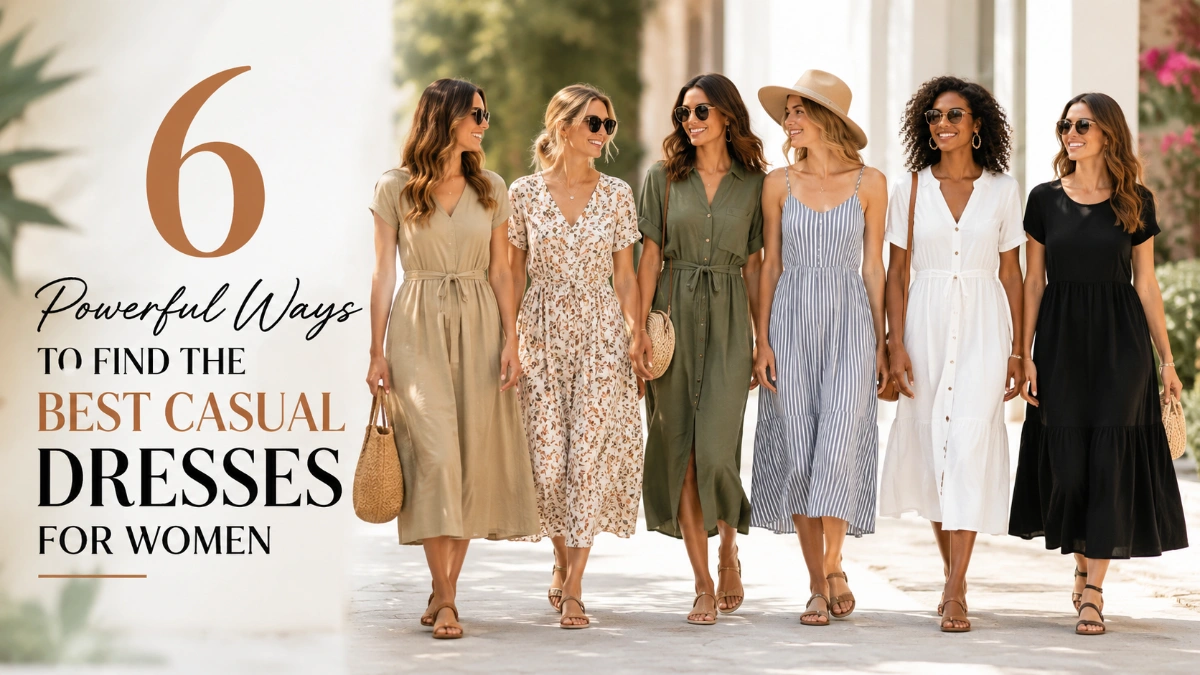
Casual Dresses for Women: Build an Easy Everyday Dress Wardrobe
Begin With Comfort and Routine
The best casual dresses for women fit into real life: they feel comfortable for the activity ahead, work with shoes already in your wardrobe, and have care requirements you can realistically follow. Before choosing a color or print, decide how you want the dress to function.
Think about your normal week. Do you need something for walking, commuting, relaxed office days, travel, warm weather, or simple weekend plans? A dress becomes more useful when its fabric, length, and level of structure support that routine rather than only looking appealing in a product image.
Retail collections commonly group casual dresses by length and shape, including T-shirt, shirt, mini, midi, and maxi options. These labels are helpful starting points, but the product details decide whether a particular dress fits your needs.
Let Fabric Guide the Choice
Fabric affects the experience of wearing and caring for a dress. Instead of relying on broad words such as “soft,” “airy,” or “easy,” check the details that a product page can actually confirm: fibre composition, whether the fabric is knit or woven, lining, stretch information, and washing instructions.
Dimensional changes after laundering can be influenced by fibre, yarn, construction, processing, finishing, manufacturing, and care practices. That is why one cotton dress can behave differently from another, and why the garment label should guide care rather than a general assumption based only on the material name.
When comparing casual dresses for women, use this practical fabric checklist:
- Composition: Look at the complete fibre blend, not just the headline material.
- Construction: Identify whether the dress is described as knit, woven, elasticated, fitted, or relaxed.
- Lining: Check where lining is used and whether you need additional coverage.
- Care: Read washing, drying, and ironing requirements before checkout.
- Repeat wear: Ask whether the maintenance fits your laundry routine and available time.
A well-chosen fabric is not necessarily the one with the most appealing description. It is the one whose coverage, feel, upkeep, and movement match the conditions in which you will actually wear the dress.
Check Fit Before Styling
Fit determines whether a dress remains comfortable after the first five minutes. The label size is only one piece of the decision; the shoulder line, armholes, waist placement, closures, hip ease, and hem all influence how the garment works during a normal day.
Use the brand’s own size chart and any available garment measurements. You can compare those numbers with a similar dress you already wear comfortably, but treat the comparison as an estimate: cut, construction, and stretch still vary between garments.
A quick movement check helps focus the decision:
| Fit area | What to assess |
| Shoulders and armholes | Reach forward and lift your arms without pulling or rubbing |
| Bust and closures | Ensure buttons sit flat and wrap fronts keep the coverage you want |
| Waist | Check that seams, belts, and elastic stay in a comfortable position |
| Hips and skirt | Leave room to sit, walk, and take normal strides |
| Hem | Consider movement and coverage with the shoes you plan to wear |
For casual dresses for women, comfort is not a vague quality. It comes from whether the dress lets you move, sit, layer, and get through the day without constant adjustment.
Use Length as a Practical Filter
Length affects coverage, movement, layering, and footwear. Mini, midi, and maxi labels are useful filters, although the finished hem position depends on the garment measurement and your height.
- Mini dresses are often easy for informal, warm-weather wear. Check that the hem provides the coverage you want while seated and walking.
- Midi dresses can work with trainers, flats, sandals, loafers, or ankle boots, making them a flexible starting point for everyday styling.
- Maxi dresses offer more coverage and can simplify an outfit, but the hem should work safely with the footwear you intend to use.
Before buying casual dresses for women, compare a listing’s stated length against a dress you already own. This gives you a better sense of likely hem placement than a model photo alone, though it cannot account for every difference in cut or fit.
Choose a Shape for the Way You Dress
Once fabric, fit, and length are clear, select the silhouette that suits your preferred level of ease and structure. Common casual categories include T-shirt dresses, shirt dresses, wrap dresses, fit-and-flare shapes, tiered dresses, and simple slip-style options.
| Dress shape | Useful starting point | Key product-page checks |
| T-shirt dress | Straightforward, relaxed dressing | Knit weight, neckline, opacity, and hem movement |
| Shirt dress | A tidier everyday outfit | Button spacing, waist placement, and sleeve comfort |
| Wrap dress | Adjustable waist definition | Tie security, neckline coverage, and skirt overlap |
| Fit-and-flare | More shape with skirt movement | Bodice comfort, waist placement, and lining |
| Tiered dress | Soft volume and relaxed movement | Fabric transparency, volume, and coverage |
| Slip-style dress | A simple base for layers | Strap adjustment, opacity, and room for knitwear or jackets |
No single silhouette is best for everyone. The right choice is the one you can wear comfortably with your regular footwear, outer layers, and daily plans.
Turn One Dress Into Several Outfits
A casual dress is more useful when you can style it for more than one situation. Start with a base dress that already fits the setting, then change footwear and outer layers to adapt it.
- For errands or travel: Choose a relaxed dress with shoes suitable for walking, plus a light outer layer for changing temperatures.
- For a relaxed office: Choose a tidier silhouette with dependable coverage, then add loafers, clean trainers, a cardigan, or a light jacket.
- For warm weather: Choose a dress that feels comfortable in heat, pair it with flat sandals, and keep a light layer for indoor spaces.
- For cooler days: Use a midi dress with knitwear and a jacket that does not restrict movement through the skirt.
Styling can make an outfit look more relaxed or more polished, but it cannot make every dress suitable for every environment. Keep workplace dress codes, weather, walking needs, and coverage preferences in view.
Shop in a Logical Order
When a collection contains hundreds of casual dresses for women, a fixed decision sequence prevents endless browsing.
- Identify the setting in which you will wear the dress most.
- Decide the comfort priority: movement, coverage, lightness, easy layering, or a more polished look.
- Choose the length that supports that priority.
- Select a silhouette that gives the amount of structure you prefer.
- Read composition, lining, construction, and care details.
- Compare sizing and garment measurements with an existing dress where possible.
- Check multiple product images and review the retailer’s current delivery and return information.
On purchase pages, clear size, shipping, and return details are especially valuable because they help shoppers assess a product before committing. Product data for ecommerce listings can also include apparel-sizing and return-policy information when sellers supply it accurately.
Choose Dresses You Will Maintain
A dress that needs more laundering, drying, steaming, or ironing than you are prepared to handle can quickly become a low-use purchase. Care is not an afterthought; it is part of whether the dress belongs in your wardrobe.
Follow the instructions on the garment’s care label, particularly because laundering practice can affect a garment’s dimensions and fit over time. Select casual dresses for women with care needs that suit your daily routine, storage space, climate, and actual willingness to maintain them.
Frequently Asked Questions
Check the full fibre composition, whether the garment is knit or woven, lining, stretch information, opacity, and care instructions. These details are more useful than a broad fabric label on its own.
Choose based on the coverage, movement, footwear, and layering you need. Compare the listed garment length to a dress you already own to estimate where the hem may fall.
T-shirt dresses, simple midi dresses, and shirt dresses can be straightforward starting points because they often work with familiar footwear and layers. Your best choice depends on fit, climate, and desired structure.
Use the seller’s size chart and garment measurements, then compare them with a similar dress you own. Check shoulders, bust, waist, hips, and hem movement; treat the result as an estimate rather than a guarantee.
They can work in relaxed workplaces when the dress has suitable coverage and a tidy overall appearance. Check your workplace’s dress code before relying on any style.
Only if the washing, drying, steaming, or ironing requirements suit your real routine. A lower-maintenance option may deliver more repeat wear if it better fits your lifestyle.
Choose cleaner footwear, add a cardigan, light jacket, or structured bag, and begin with a dress whose coverage and fabric already suit the setting.
Care instructions affect how easily the dress fits into your routine and may influence how its shape and fit change after laundering.