Milk Chocolate: Ingredients, Nutrition, How It’s Made, and Uses
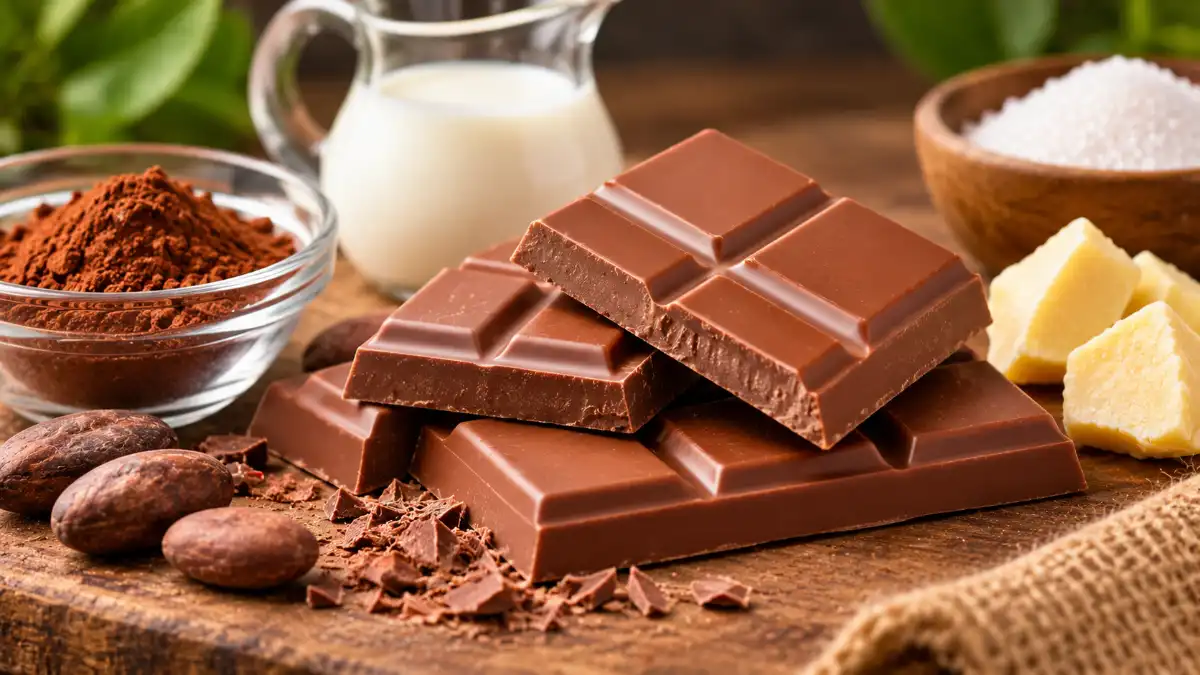
Milk chocolate is a sweet, creamy type of chocolate made from cocoa ingredients, milk solids, and sugar. It has a light brown color, a smooth texture, and a milder cocoa flavor than dark chocolate. The combination of cocoa butter, milk, and sugar gives it a rich, melt-in-your-mouth consistency that works well in candy bars, baked goods, and desserts.
In the United States, the milk chocolate standard of identity requires at least 10% chocolate liquor, 12% total milk solids, and 3.39% milkfat. These requirements help distinguish genuine milk chocolate from certain chocolate-flavored confectionery coatings. Other countries may follow different chocolate standards.
What Is Milk Chocolate Made Of?
The ingredients in milk chocolate determine its flavor, sweetness, and texture. Although manufacturers use different recipes, most varieties contain the same basic components.
The principal ingredients include:
- Chocolate liquor (cocoa mass): Made by grinding cocoa nibs into a thick paste containing cocoa solids and cocoa butter. Despite its name, chocolate liquor contains no alcohol.
- Cocoa butter: The natural fat extracted from cocoa beans. It gives chocolate its smooth texture and helps it melt pleasantly in your mouth.
- Milk ingredients: Milk powder, concentrated milk, or other permitted dairy ingredients contribute creaminess, milk solids, and milkfat.
- Sugar: Balances cocoa’s natural bitterness and creates the familiar sweet taste.
- Emulsifiers: Ingredients such as lecithin help control the chocolate’s consistency and improve its flow during manufacturing.
- Flavorings: Vanilla and other permitted flavorings may be added to complement the cocoa and milk.
The U.S. minimum chocolate liquor requirement follows a specific regulatory calculation. It isn’t the same as the total cocoa percentage printed on some chocolate packages.
Chocolate with a higher cocoa percentage often has a stronger cocoa flavor. However, its sweetness also depends on how much sugar and milk the manufacturer uses. A higher cocoa percentage doesn’t automatically mean better nutritional quality.
How Is Milk Chocolate Made?
Making milk chocolate involves several stages that turn cocoa beans and other ingredients into a smooth, flavorful product. Each stage plays a part in developing its taste, consistency, and appearance.
- Preparing and roasting: Cocoa beans are cleaned and roasted to develop their flavor. The roasted beans are then cracked, and their shells are removed.
- Grinding: The remaining cocoa nibs are ground into chocolate liquor, a paste containing cocoa solids and cocoa butter.
- Mixing: Chocolate liquor is blended with sugar, milk ingredients, and any additional cocoa butter or other ingredients required by the recipe.
- Refining: The mixture passes through refining equipment that reduces particle size, making the finished chocolate feel smoother rather than gritty.
- Conching: The chocolate is mixed and heated under controlled conditions to develop its flavor, improve consistency, and remove some undesirable volatile compounds.
- Tempering: Controlled heating and cooling encourage stable cocoa butter crystals to form. This helps chocolate develop a glossy appearance and a satisfying snap.
- Molding and cooling: The finished chocolate is poured into molds or shaped into other products before cooling and packaging.
The exact process varies between manufacturers. Refining and conching are particularly important for producing the silky texture associated with milk chocolate.
Milk Chocolate vs. Dark Chocolate vs. White Chocolate
Milk, dark, and white chocolate differ mainly in their cocoa ingredients, milk content, sweetness, and flavor. Although they share some ingredients, each has distinct characteristics.
| Feature | Milk Chocolate | Dark Chocolate | White Chocolate |
| Cocoa ingredients | Cocoa solids and cocoa butter | Usually more nonfat cocoa solids | Cocoa butter without nonfat cocoa solids |
| Milk ingredients | Required in standardized products | May be absent or included | Required in standardized products |
| Sweetness | Usually sweet | Often less sweet, depending on formulation | Usually very sweet |
| Flavor | Creamy, mild cocoa | Stronger cocoa flavor | Sweet, buttery, milky |
| Color | Light to medium brown | Medium to dark brown | Ivory or pale cream |
| Caffeine | Contains some | Generally more | Usually negligible |
| Common uses | Candy, cookies, cakes, coatings | Baking, ganache, desserts | Candy, decorations, baking |
Why Is Milk Chocolate Sweeter Than Dark Chocolate?
Milk chocolate generally has more sugar and milk ingredients relative to its nonfat cocoa solids. Milk also reduces the perceived bitterness of cocoa, giving the chocolate a sweeter, creamier taste.
Dark chocolate usually has a more pronounced cocoa flavor, but that doesn’t mean every dark chocolate bar contains less sugar. Comparing ingredient lists and nutrition labels is more reliable than judging by color.
White chocolate is different because it contains cocoa butter without the nonfat cocoa solids responsible for chocolate’s brown color and characteristic cocoa flavor. In the United States, standardized white chocolate must contain at least 20% cocoa butter.
Milk Chocolate Nutrition Facts and Health Considerations
Milk chocolate provides energy mainly through carbohydrates and fats. It also contains minerals derived from cocoa and milk, although the amounts depend on the recipe.
The following figures are approximate values for a 1-ounce (28 g) serving of plain milk chocolate, consistent with a generic milk chocolate nutritional profile.
| Nutrient | Approximate Amount |
| Calories | 150 kcal |
| Total carbohydrates | 17 g |
| Total sugars | 14.4 g |
| Total fat | 8.3 g |
| Saturated fat | 5.2 g |
| Caffeine | 5–6 mg |
These are representative estimates based on generic milk chocolate nutrition data, rather than the exact values for every product. The caffeine figure is also approximate and may differ with cocoa content.
Always check the Nutrition Facts label for the specific product you’re eating, particularly when comparing sugar, saturated fat, and serving sizes.
Is Milk Chocolate Healthy?
Milk chocolate can be enjoyed as part of a balanced diet, but it typically contains considerable amounts of added sugar and saturated fat. Eating it occasionally in moderate portions is different from regularly consuming large quantities.
Dark chocolate often contains more cocoa-derived compounds, but that doesn’t automatically make every dark chocolate product healthier than milk chocolate. Calories, sugar, fat, and portion sizes still matter.
Although chocolate is sometimes associated with improvements in mood, memory, and cardiovascular health, milk chocolate shouldn’t be considered a proven treatment or reliable way to achieve those benefits.
Does Milk Chocolate Contain Allergens?
Milk chocolate contains dairy ingredients, making it unsuitable for people with milk allergies. Depending on the recipe, it may also contain soy lecithin, nuts, wheat-containing ingredients, or other allergens.
In the United States, major food allergens used as ingredients must be identified on packaged food labels. The FDA’s food allergy guidance explains these labeling requirements and why checking product packaging matters.
Plain milk chocolate may be gluten-free, but varieties containing cookies, malted ingredients, or certain fillings can contain gluten. Cross-contact during manufacturing is another consideration.
For people with celiac disease, choosing products that meet recognized gluten-free labeling requirements provides greater reassurance than assuming all plain chocolate is gluten-free.
Types and Common Uses of Milk Chocolate
Milk chocolate comes in several forms, depending on whether it’s intended for snacking, baking, or confectionery.
- Chocolate bars: Popular for everyday snacking and easy to break into pieces for baking.
- Chocolate chips: Commonly used in cookies, muffins, and other baked goods. Some varieties are designed to hold their shape during baking.
- Filled chocolates: Feature milk chocolate shells surrounding caramel, nuts, creams, or other fillings.
- Couverture chocolate: Contains sufficient cocoa butter for fluid coating, dipping, and professional confectionery work.
- Chocolate coatings: Used for dipping and decorating. Some compound coatings contain substitute vegetable fats and don’t meet the standard for genuine milk chocolate.
Milk chocolate also works well in ganache when combined with cream. Its sweetness pairs nicely with caramel, nuts, berries, and other ingredients that offer contrasting flavors.
How to Choose, Store, and Melt Milk Chocolate
Whether you’re buying chocolate for snacking or baking, checking its ingredients and handling it properly can make a noticeable difference in flavor and texture.
How to Choose Good Milk Chocolate
Start by reading the product name and ingredient list. Genuine milk chocolate contains cocoa ingredients, milk ingredients, and sugar.
Look for cocoa butter among the ingredients. Products made primarily with substitute vegetable fats may be labeled as compound coatings or chocolate-flavored products instead of milk chocolate.
A declared cocoa percentage can help you understand the chocolate’s composition, but it doesn’t guarantee superior quality or a particular sweetness level. Choose based on the flavor and texture you prefer and how you plan to use it.
How Should Milk Chocolate Be Stored?
Keep milk chocolate tightly wrapped in a cool, dry place, ideally around 60–70°F (16–21°C). Protect it from direct sunlight, moisture, and strong odors, which can affect its quality.
Temperature fluctuations may cause chocolate bloom, a whitish or grayish coating on the surface. Bloom generally affects appearance and texture rather than making properly stored chocolate unsafe.
Refrigeration isn’t usually necessary if your room is sufficiently cool. In warmer conditions, use an airtight container before refrigerating, then let the chocolate reach room temperature before opening it to reduce condensation.
Professional chocolate storage recommendations also emphasize stable temperatures, dry conditions, and protection from moisture to preserve texture and appearance.
How Do You Melt Milk Chocolate Without Burning It?
Milk chocolate can scorch when exposed to excessive heat, so melting it slowly is important. Use a dry, heatproof bowl over barely simmering water or microwave it at reduced power in short intervals.
Stir frequently, and remove the chocolate from the heat while a few small pieces remain. Residual warmth should finish melting them.
Keep steam and water away from melted chocolate. Even a small amount of moisture can cause it to seize, leaving it thick and grainy.
When making molded chocolates or dipped candies, proper tempering helps produce a glossy surface, firm texture, and clean snap.
Read Also: Milk Chocolate
Frequently Asked Questions
Can You Substitute Milk Chocolate for Dark Chocolate in Baking?
Yes, milk chocolate can replace dark chocolate in many cookies, brownies, and desserts, but the results will be sweeter and less intensely cocoa-flavored. Because milk chocolate has different sugar and fat proportions, some recipes may need adjustments to maintain the intended texture.
Milk chocolate has a limited shelf life, but the exact period depends on its ingredients, packaging, and storage conditions. Check the manufacturer’s date and storage instructions. A white, bloomed surface doesn’t necessarily mean the chocolate has spoiled, but products with mold, unusual odors, or signs of contamination should be discarded.


