Ounces in a Pound: Conversion Chart, Formula, and Examples
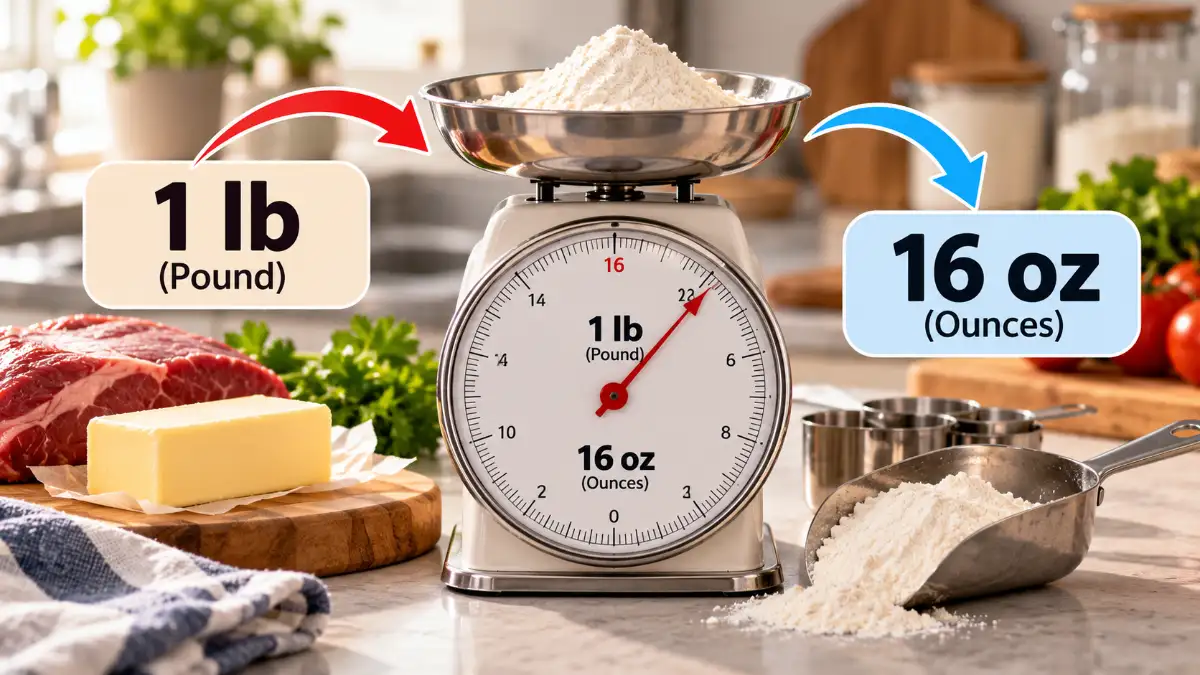
There are exactly 16 ounces in a pound in the standard US weight system. A pound is abbreviated as lb, while an ounce is abbreviated as oz. That means ½ pound equals 8 ounces, ¼ pound equals 4 ounces, and ¾ pound equals 12 ounces.
To convert pounds to ounces, simply multiply by 16. To convert ounces to pounds, divide by 16. These calculations come in handy when measuring ingredients, comparing grocery packages, or checking shipping weights.
How Many Ounces Are in a Pound?
One pound contains 16 ounces in the standard avoirdupois weight system used throughout the United States. This conversion applies to everyday weight measurements, including food, household products, and packages. The same relationship appears in standard cooking measurement equivalents.
Here are the most common equivalents:
- ¼ pound = 4 ounces
- ½ pound = 8 ounces
- ¾ pound = 12 ounces
- 1 pound = 16 ounces
- 1½ pounds = 24 ounces
- 2 pounds = 32 ounces
For example, if a recipe calls for half a pound of cheese, you’ll need 8 ounces. Likewise, a 16-ounce package of ground beef weighs exactly one pound.
How to Convert Pounds to Ounces and Ounces to Pounds
Converting between these units takes just one calculation. Whether you multiply or divide depends on which measurement you’re starting with. The standard mass conversion factors provide the basis for these calculations.
Pounds to Ounces: Multiply by 16
The pound to ounce conversion formula is:
Ounces = Pounds × 16
For example, to convert 2 pounds into ounces:
2 × 16 = 32 ounces
This formula works just as well with fractions and decimals.
- 0.25 lb × 16 = 4 oz
- 0.5 lb × 16 = 8 oz
- 1.5 lb × 16 = 24 oz
- 2.5 lb × 16 = 40 oz
- 3.75 lb × 16 = 60 oz
Suppose you’re buying 2.5 pounds of potatoes. Multiplying 2.5 by 16 tells you that you’re purchasing 40 ounces.
Ounces to Pounds: Divide by 16
To convert ounces back into pounds, reverse the calculation:
Pounds = Ounces ÷ 16
For example, converting 24 ounces into pounds gives:
24 ÷ 16 = 1.5 pounds
Here are a few more examples:
- 4 oz ÷ 16 = 0.25 lb
- 8 oz ÷ 16 = 0.5 lb
- 12 oz ÷ 16 = 0.75 lb
- 32 oz ÷ 16 = 2 lb
- 40 oz ÷ 16 = 2.5 lb
Pounds to Ounces Conversion Chart
The following ounces in a pound chart lets you find common weight conversions at a glance, without doing the math yourself.
| Pounds (lb) | Ounces (oz) |
| ¼ pound | 4 oz |
| ½ pound | 8 oz |
| ¾ pound | 12 oz |
| 1 pound | 16 oz |
| 2 pounds | 32 oz |
| 3 pounds | 48 oz |
| 5 pounds | 80 oz |
| 10 pounds | 160 oz |
Keep this chart handy when following recipes, shopping for groceries, or working with other everyday measurements.
Ounces to Pounds Conversion Chart
Already have a weight in ounces? Use this reverse conversion chart to find its equivalent in pounds.
| Ounces (oz) | Pounds (lb) |
| 4 oz | 0.25 lb |
| 8 oz | 0.5 lb |
| 12 oz | 0.75 lb |
| 16 oz | 1 lb |
| 24 oz | 1.5 lb |
| 32 oz | 2 lb |
Ounces vs. Fluid Ounces: What’s the Difference?
Ounces and fluid ounces sound similar, but they measure different things.
An ounce (oz) measures mass, commonly called weight in everyday situations. A fluid ounce (fl oz) measures volume, meaning the amount of space a liquid occupies. The distinction is reflected in standard US customary measurement conversions.
Consider these examples:
- An 8 oz package of cheese weighs half a pound.
- An 8 fl oz measuring cup holds one US cup of liquid.
- An 8 fl oz portion of cooking oil doesn’t necessarily weigh 8 oz.
Why does this matter? Different liquids have different densities. Eight fluid ounces of oil won’t have the same weight as eight fluid ounces of water.
To convert a liquid’s volume into weight, you need to know its density.
When following a recipe, pay attention to whether an ingredient is measured by weight or volume. Mixing up the two can leave you with too much or too little of an ingredient.
Common Uses and Measurement Mistakes
Pounds and ounces appear regularly in American kitchens, grocery stores, and shipping calculations. Understanding how they relate can help you avoid simple measuring errors.
Cooking and baking: Some recipes specify ingredient weights rather than cup measurements. If you need 12 ounces of butter or another ingredient, that’s ¾ pound. A kitchen scale makes measuring by weight easier and more accurate.
Grocery shopping: Meat, cheese, and produce are often priced or sold by the pound. Knowing that 16 ounces makes one pound helps you compare packages, especially when their weights are listed differently.
Shipping packages: Package weights may be expressed in pounds and ounces. For instance, a parcel weighing 2 pounds and 8 ounces has a total weight of 40 ounces, or 2.5 pounds. Keep in mind that shipping charges may depend on factors beyond the package’s actual weight.
Does Every Pound Contain 16 Ounces?
The familiar 16-ounce conversion applies to the avoirdupois pound, which is used for ordinary weight measurements in the United States.
There’s also a specialized system called troy weight. A troy pound contains 12 troy ounces rather than 16 standard ounces. Troy ounces are primarily associated with precious metals such as gold and silver.
Because troy ounces and standard ounces have different weights, they shouldn’t be treated as interchangeable. The distinction is documented in official tables of measurement units.
For readers using metric units, one standard pound equals exactly 453.59237 grams, or approximately 454 grams.
For nearly all everyday US measurements, remember this simple rule: multiply pounds by 16 to get ounces, or divide ounces by 16 to get pounds.
Read Also: Ounces in a Pound
Frequently Asked Questions
There are 20 ounces in 1.25 pounds. Multiply 1.25 by 16 to get the answer. This is also equivalent to 1 pound and 4 ounces.
Multiply the pounds by 16, then add any remaining ounces. For example, 3 pounds and 6 ounces equals (3 × 16) + 6 = 54 ounces. This method is useful when a package weight is written using both units.

[…] distinction also matters when converting ounces into pounds, because those conversions involve weight rather than liquid […]