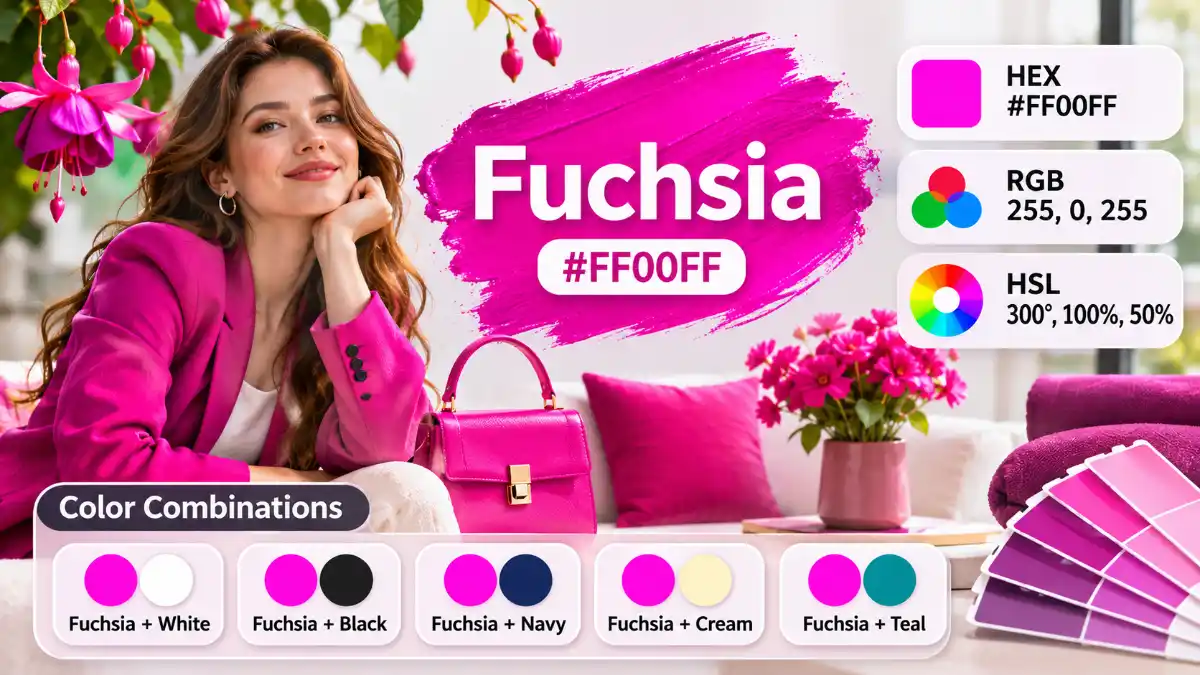
Fuchsia Color: HEX Code, Meaning, Shades and Combinations
Fuchsia color is a bright, highly saturated pink-purple shade that falls visually between pink and purple. Its standard web color code is #FF00FF, with RGB values of 255, 0, 255 and HSL values of 300°, 100%, 50%. In digital design, fuchsia and magenta are identical CSS colors. However, their everyday meanings can differ in fashion, art, and interior design.
Fuchsia’s vivid appearance makes it especially striking alongside neutral colors such as black, white, charcoal, navy, and cream. Pairing it with teal or green creates a bolder contrast. Whether you’re choosing an outfit, decorating a room, or creating digital graphics, understanding these combinations can help you use fuchsia more effectively.
What Color Is Fuchsia?
Standard fuchsia has a vibrant, almost electric pink-purple appearance. It’s more intense than many traditional pink shades and noticeably brighter than dark purple.
In the RGB color model, fuchsia combines maximum red and blue light with no green. This combination gives it its distinctive appearance on digital screens.
Not every color labeled fuchsia looks exactly alike, though. Fabrics, paints, cosmetics, and decorative products may feature lighter, darker, warmer, or more muted variations. The standardized digital color provides a precise reference, while everyday uses of the name allow more flexibility.
Fuchsia Color HEX Code, RGB and HSL Values
The standard fuchsia color uses HEX #FF00FF, RGB 255, 0, 255, and HSL 300°, 100%, 50%. Its CSS color name is fuchsia, which produces the same color as magenta.
According to the CSS Color Module specification, these named colors have standardized values, making them reliable references for digital design.
The HEX code #FF00FF is particularly useful for websites, graphics, and other digital projects where consistent color values matter.
Fuchsia’s approximate CMYK value is 0%, 100%, 0%, 0%, using a simplified mathematical conversion. However, this isn’t a universal printing formula. The final appearance depends on the printer, inks, paper, and color profile, so a printed shade may not match its appearance on a screen.
Fuchsia vs Magenta, Hot Pink, Purple and Violet
Fuchsia is easy to confuse with magenta, hot pink, purple, and violet. Although these colors share pink or purple characteristics, their standardized digital values reveal important differences.
The following comparisons use recognized CSS named-color values.
| Color | HEX Code | Appearance |
| Fuchsia | #FF00FF | Bright, saturated pink-purple |
| Magenta | #FF00FF | Identical to CSS fuchsia |
| Hot Pink | #FF69B4 | Pinker and less intensely saturated than fuchsia |
| Purple | #800080 | Darker, richer purple |
| Violet | #EE82EE | Lighter and less intensely saturated than fuchsia |
Is Fuchsia the Same as Magenta?
Yes. Fuchsia and magenta are identical in CSS, with both using the HEX code #FF00FF.
Outside digital color specifications, however, the names aren’t always interchangeable. Fashion designers, paint manufacturers, and artists may describe slightly pinker or softer shades as fuchsia, while magenta may refer to other variations of red-purple.
Purple and violet also have broader meanings in everyday language than their specific CSS color values suggest. That’s why checking an actual color sample is more reliable than relying on a name alone.
Shades of Fuchsia: Light, Dark and Muted Variations
Fuchsia comes in a range of lighter, darker, and less saturated variations. Each creates a somewhat different impression. Light shades tend to feel softer, while darker versions have a richer, more dramatic appearance.
| Shade | HEX Code | Description |
| Light Fuchsia | #FF99FF | Pale, delicate pink-purple |
| Soft Fuchsia | #FF66FF | Bright but lighter than standard fuchsia |
| Standard Fuchsia | #FF00FF | Fully saturated pink-purple |
| Deep Fuchsia | #CC00CC | Richer, darker variation |
| Dark Fuchsia | #990099 | Deep purple-pink |
| Muted Fuchsia | #B34D99 | Subdued, less saturated appearance |
These HEX codes represent illustrative variations rather than officially standardized shade names.
Light fuchsia works nicely in playful graphics and decorative accessories. Darker versions can give a design more depth, while muted fuchsia is often easier to incorporate into rooms where a less intense color scheme is preferred.
What Colors Go With Fuchsia?
The right fuchsia color combinations depend on the look you’re trying to achieve. Neutral shades help balance its intensity, while contrasting colors create a more energetic effect.
| Color Pairing | HEX Codes | Best Uses |
| Fuchsia and White | #FF00FF + #FFFFFF | Modern interiors and clean graphics |
| Fuchsia and Black | #FF00FF + #000000 | Bold outfits and striking designs |
| Fuchsia and Charcoal | #FF00FF + #36454F | Contemporary rooms and branding |
| Fuchsia and Navy | #FF00FF + #000080 | Fashion and sophisticated accents |
| Fuchsia and Cream | #FF00FF + #FFFDD0 | Soft, balanced interiors |
| Fuchsia and Teal | #FF00FF + #008080 | Creative graphics and decorative details |
| Fuchsia and Green | #FF00FF + #008000 | Energetic, contrasting palettes |
Black and white make fuchsia stand out, while charcoal, navy, and cream can soften its overall impact. These combinations are useful when you want the color to attract attention without overwhelming everything around it.
For example, a cream-colored living room can accommodate fuchsia pillows or artwork without a complete redesign. Similarly, a black outfit gains a colorful accent with a fuchsia handbag or pair of shoes.
Teal and green offer stronger contrast. They can work particularly well in decorative arrangements and expressive graphics, especially when one color dominates and the other is used more sparingly. The Adobe fuchsia color guide also explores how variations of this shade can be used in creative palettes.
Digital accessibility matters: Standard fuchsia provides approximately 6.70:1 contrast with black text but only 3.14:1 with white text. Under WCAG contrast requirements, black meets Level AA requirements for normal text on a standard fuchsia background, while white does not.
These contrast values apply to the exact colors specified. Other fuchsia shades and text colors should be checked individually before use.
Fuchsia Color Meaning and Symbolism
Fuchsia is commonly associated with creativity, confidence, energy, individuality, and playfulness. Its bold appearance makes it a popular choice for expressive clothing, decorative accents, and graphics designed to attract attention.
The color takes its name from the fuchsia flower, which was named in honor of German botanist Leonhart Fuchs. This connection is part of the history of the word fuchsia.
Although people often describe fuchsia as energetic or empowering, these meanings aren’t universal. Personal experiences, cultural influences, and surrounding colors all affect how someone perceives it.
How to Use Fuchsia in Fashion, Home Decor and Design
Fuchsia can make a strong impression without taking over an entire design. Using it as an accent often provides more flexibility than making it the dominant color.
Fashion: A fuchsia dress makes a statement on its own, while scarves, handbags, and shoes bring color to otherwise neutral outfits. Black, navy, cream, and white are especially practical choices for everyday styling.
Interior design: Fuchsia cushions, curtains, artwork, and decorative accessories can brighten a neutral room. Darker shades suit more dramatic interiors, while lighter variations can complement softer color schemes.
Branding and graphic design: Fuchsia can draw attention to selected elements in promotional materials, branding, and digital graphics. Pairing it with neutral backgrounds and giving surrounding elements enough space helps prevent a crowded appearance.
Web design: Fuchsia can highlight buttons, decorative elements, and selected interface features. However, color contrast and readability should guide its use, particularly when placing text over colored backgrounds.
Lighting and materials can also change how fuchsia appears. Fabric viewed under warm indoor lighting may look different in natural daylight. Likewise, digital screens and printed materials don’t always reproduce colors identically. Checking physical samples or print proofs is useful when an accurate match matters.
Read Also: Fuchsia Color
Frequently Asked Questions
Fuchsia can appear warm or cool depending on its exact shade and the colors around it. Its strong red component contributes warmth, while its blue component gives it a cooler purple quality. Compared with orange, fuchsia often looks cooler; beside blue-violet shades, it may appear warmer.
Fuchsia is a bright pink-purple color that combines characteristics of both shades. It often appears closer to vivid pink, although its blue component gives it a noticeable purple quality. Standard digital fuchsia has the HEX code #FF00FF.
Fuchsia pairs well with black, white, navy, charcoal, and cream for a balanced appearance. Teal and green create bolder contrasts, while soft neutrals make fuchsia easier to incorporate into outfits, home interiors, and graphic designs.